Thank you to everyone who attended the Emergency Management Trivia Night!
We were joined by professional host, ‘Trivia Guy’ Gaby Tabak for trivia crafted by members of your EM community.

Teams went head to head to solve questions, guess disaster tunes, recall mentions of Emergency Management in pop culture and history, and recalled all those things they learned in school and thought they’d never use again.

All participants received the following with their ticket:

  • Drink (alcoholic or non-alcoholic)
  • Appetizers
  • Raffle prize entry
  • Unlimited fun
  • Prizes for trivia champions!


Thank you also to our food and beverage sponsor: 

Get Ready Online (GRO) created an innovative app – ATLAS-Leading The Way® – to integrate Emergency Management, Business Continuity, and Infectious Disease Outbreak. Our app provides immediate situational awareness, rapid decision making, procedural checklists for all levels of staff, LMS, while ensuring industry compliance. GRO answers the question “What am I supposed to do?”  https://getreadyonline.com/



eds-and-durham-police-psu

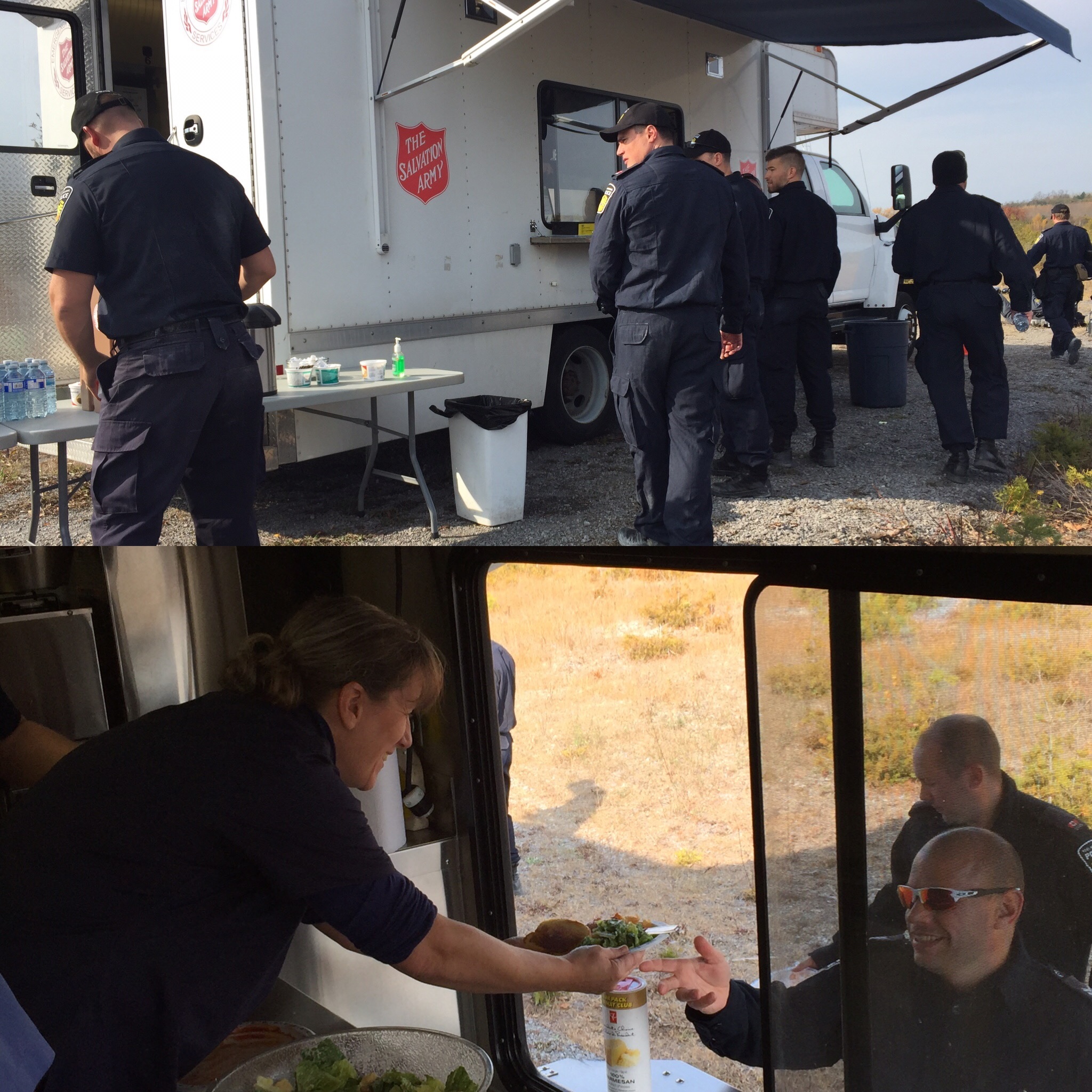
You may already know that The Salvation Army has a long history of supporting emergency response and recovery efforts domestically and internationally through our Emergency Disaster Services (“EDS”) program.  While it’s helpful to learn from the past, it is equally important to look to the future.

At The Salvation Army’s Ontario Central-East Division (Peel Region in the West, through Ottawa in the East, and North through Parry Sound), we have been quietly plugging away at developing the next stage of our program.

Over our long history and in recent years, we have amassed valuable experiences, lessons learned, and best practices.  While the world changes around us, we are proactively embracing a greater role in our local communities.


Our goal is twofold:

oce-eds-divisional-fleet-new-branding

1) Improve all facets of our Emergency Disaster Services program (including, but not

limited to our service offerings, response capacity, and ease of access for municipal and provincial services).

2) Support and encourage active coordination among NGO’s active in emergency management, including through ou

r participation in the NGO Alliance of Ontario, among other initiatives.

To us, EDS is just another way The Salvation Army can continue to live up to our Mission, serve our communities, and help those in need.
Keep checking OAEM.ca for more great things from your partner in emergency management – The Salvation Army.

The Salvation Army Ontario Central-East Divisional EDS Leadership:

Jeff Robertson Interim Director, Emergency Disaster Services

Mark Evans Manager, Emergency Disaster Services – GTA & North Region

Herbert Sharp Director, Emergency Disaster Services –East Region

eds-on-oct-22

If you find yourself in the part of the province not specified above but are still interested in The Salvation Army’s Emergency Disaster Services you may contact:

Al Hoeft Director, Emergency Disaster Services – Ontario Great Lakes Division


Closing the gap between emergency management expertise and political authority

By Johanu Botha, MPA, PhD Candidate

Canadian emergency management organizations exist in a bewildering array of bureaucratic locations. They are nestled in with fire-fighting agencies (Newfoundland & Labrador), share a minister with municipal affairs (Alberta), sit in an infrastructure department (Manitoba), or fall under the more conventional public safety portfolio (British Columbia). Meanwhile, Public Safety Canada is responsible for federal emergency management, but unlike the provincial – and American – contexts, there exists no special federal emergency management agency as such. The only common theme throughout the country and across levels of government is that no matter where emergency management expertise is situated, it resides relatively far away from the Premier or Prime Minister’s Office.

This is a problem because when minor emergencies grow into disasters, those Offices become intimately involved in the response. 21st century Canadian floods, epidemics, wildfires and hurricanes show that routine emergency management is left to the experts until they reach a critical threshold of political salience, at which point Mayors, Premiers, and Prime Ministers become front and centre. Part of their presence is symbolic, but they also make very real emergency management decisions, especially regarding resource accumulation and coordination.

Whether to order in more vaccines, how to distribute vaccines, whether to call in the Armed Forces, where to prioritize military deployment, which communities’ infrastructure to ‘save’ over others during flood redirection, the amount of firefighters required from other jurisdictions (and who will pay for them), and which partners (from other governments, the non-profit and private sectors) to invite to the decision making table, are but a few of the decisions that come across the main political authority’s desk during disaster.

While expertise does float up from agencies through departments up to the minister before reaching the premier’s desk, the distance it has to travel provides ample opportunity for dilution of expertise. Like in any policy area, expertise is moulded as it floats up in order to fit certain criteria and/or interests, but unlike any other policy area, emergency management expertise is central to the immediate stabilization of untenable chaos.

The key role of political authority in disaster response is not a Canadian-specific phenomenon. In their multi-year comparative study on American, Japanese and Italian disaster responses, McLuckie and Benjamin described how final strategies during major events were ultimately decided by the relevant political authority (1969). At a smaller scale, Fritz’s classic work on behaviour in emergency shelters showed that decisions about strategy and resource allocation went to those who arose as powerful personalities (1958), regardless of actual management or hazard-specific expertise. More recently, American scholars have called the president “the nation’s de facto crisis manager in chief” (Stern 2009, 189). The problem these dynamics pose for effective emergency management is that the moment adverse events reach a point where their response requires professional coordination, they are often salient enough issues for the political authority to take over, limiting the influence an emergency management agency might have had.

The solution here is not to constrain key emergency management decisions to some isolated bureaucratic corner of the disaster response system. Such an attempt is a.) naïve about political power, which by definition has an interest in managing events that threaten parts of the state and b.) difficult to justify from a democratic perspective. The solution, instead, is to bring the emergency management agency institutionally closer to the political authority, so that when key disaster response decisions are made there exists minimal bureaucratic distance between expertise and the Premier/Prime Minister’s Office.

There are two obvious dangers to this solution: First, the risk of politicization. The very point of distancing expertise from political authority is to maintain the scientific and/or professional validity of such expertise. The recent resignation of Statistics Canada’s chief statistician, the Royal Canadian Mounted Police investigation into the Senate expense scandal, and the prohibiting of the Centers for Disease Control & Prevention to advocate gun control as a public health strategy in the United States, are prominent examples where the alleged proximity between political authority and what is viewed as necessarily non-partisan government organizations has been criticized.

The second risk of closing the institutional gap between emergency management expertise and political authority is the use of an emergency management agency to function as a business continuity office for government. Despite the widespread conflation between the two (including in official certifications and standards), the ultimate goal of business continuity offices is the survival of a particular organization as an end in itself, while the goal of an emergency management agency is to coordinate those organizations that respond to disaster in order to reestablish the regular functioning of a community.

It would be a shame to bring an emergency management agency closer to political authority only to see the former’s expertise used to support the latter instead of communities. Indeed, it’s my guess that a hitherto unrecognized distinction between successful and failed societies is that whatever the form emergency management agencies has taken (throughout history, some type of official or office has been charged by governments to manage floods, famine, disease, socioeconomic decline, etc.), in successful societies such agencies were not reduced to merely sustaining the viability of the political authority.

So what to do in Canada? How can we close the gap between emergency management expertise and the ultimate emergency manager – the political authority – without seeing the politicization of such expertise or its reduction to merely keeping government afloat? One way forward is a top-down institutional solution to the politicization problem and a bottom-up emergency management community solution to the business continuity problem.

Politicization can be curbed by carving out a unique bureaucratic space for a federal – and each provincial – emergency management agency. That space can take the form of the Canadian Border Services Agency which, despite the recent woes of the RCMP, is a form for the most part good at minimizing severe politicization (indeed, other similar agencies such as the Canadian Security Intelligence Service has been argued by some to be too good at avoiding political influence). And the morphing of emergency management agencies into business continuity offices can be curbed by emergency management professionals and scholars in the non-profit, private, and academic spheres who stress that emergency management credentials and standards need to reflect a mandate where the resiliency of an entire community, not just its government, is served.

Whatever the detailed solution of the distance between emergency management expertise and political authority, it will require substantial debate. The days of emergency management policy avoiding prolonged public scrutiny due to its lack of political salience is over. The increasing frequency and impact of disasters will make sure of that.

By David Etkin

A number of years ago when I first began to get really interested in ethics, I thought back to my time as a federal civil servant and wondered if we had a code of ethics to guide our behavior and decision making. I didn’t even know! With a little research, I found it[1], and after looking it over did recall having to read it (or something like it) when I first entered public service. It was not a topic that came up again in my next 28 years of service, though I must say that, in general, the public servants I worked with do have a strong social conscience and paid attention to issues of right and wrong in their work and dealings with the public.

There is a massive literature on ethics, and over a period of several years I explored some of the ethical issues related to emergency management, published a few papers on that topic (see bibliography below), wrote a chapter on it in my textbook on disaster theory, and gave a few presentations on the topic, at the FEMA Higher Education Conference, the Canadian Risk and Hazards Network, and elsewhere. At this point, I consider myself to be an informed amateur on the topic. One of the interesting aspects about this issue, to me, was the relative lack of research or reports dealing with ethics in emergency management, compared to other fields. Why did it not garner more attention? Was it not perceived to be important enough? In our graduate program in disaster and emergency management at York University, we have offered a course on disaster ethics twice so far, but did not offer it again this year because enrollments were so low. The students who do take it, however, generally love it and often suggest that it should be a required course. We will probably try offering it again next fall, and see what enrollment is like.

At this point I should note that the International Association of Emergency Managers (IAEM) does have a code of ethics published on their web site[2].  It was a good exercise for the IAEM to develop this code and an important first step. Compared to the codes of many other professions, however, it is not well developed.  But to put this in context, I would argue that most of the more developed codes seen elsewhere would greatly benefit from more depth of analysis. More is needed.

A great deal of background thought needs to go into the development of a code of ethics, and there are traps that need to be avoided. The process to create a code should be inclusive and comprehensive, and involve professional ethicists as well as the emergency management community. Below is a straw (wo)man proposal for a Code of Ethics – for the purpose of generating discussion, and new and better proposals. The principles are based upon material in the papers listed in the bibliography. This proposal reflects my thoughts only, and is not the outcome of a consultation process.

 Suggested Principles for a Code of Ethics for Emergency Management

  1. Two Codes are Needed: One for emergency managers and another for emergency management organizations: The first and perhaps most important principle is that a Code of Ethics for emergency managers must be accompanied by a Code of Ethics for emergency management organizations. They need to be mutually supportive. Without this interplay between individuals and the organizations that they work for, it is extremely challenging for emergency managers to act in ways they consider to be ethical, but that might conflict with competing organizational goals or priorities.
  2. Ethical Plurality. More than one ethical theory is relevant to determining ethical decision making and behavior.
  3. Cultural Relevance: The application of ethical theory varies according to cultural norms, in order to reflect variations in values between different cultures. This does not mean that some values may not be considered absolute, such as prohibitions against murder.
  4. Moral Being & Moral Community:
    1. Emergency managers are moral beings who shall endeavor to act in ways that reflect ethical reasoning. Emergency management organizations shall endeavor to be moral organizations that incorporate ethical reasoning in the development and application of policies and procedures in a continuing and ongoing process; these policies and procedures are an inherent part of organizational culture, and encourage employees to act in moral ways.
    2. The moral community served by emergency managers and emergency management organizations must, at a minimum, include all citizens. People, particularly the victims of disaster, shall not be placed in the category of things, but must be considered as beings imbued with rights and duties.
  5. Utilitarian Ethics:
    1. Where utilitarian ethics are used, careful consideration must be given to whose good is being evaluated and how it is measured. The good of victims will generally have priority over the good of non-victims.
    2. Where utilitarian ethics are used, disadvantaged individuals and groups who sacrifice for the greater good are entitled to reasonable compensation.
  6. Deontological Ethics:
    1. Where deontological ethics are used, they shall reflect the normative values of society. This can be challenging in a multicultural society, and will require a broad social discourse.
  7. Duty of Care: Governments owe a special duty of care to some vulnerable populations.
    1. This is particularly true for wards of the state, such as hospital patients and retirement home residents.
    2. A greater duty of care exists for especially vulnerable people, which justifies some level of paternalism.
    3. Governments have a duty of care to their employees.
    4. A duty of care exists for disaster victims that is greater than for citizens who have not suffered in a disaster, all other things being equal. This justifies the allocation of resources to victims as compared to non-victims who may be in greater need.
      1. This duty is diminished when victims knowingly engaged in risky actions, where they had the choice of less risky options. Care must be taken to avoid the trap of ‘blaming the victim’.
      2. This duty may also be diminished where relief may result in the creation of a culture of dependency. This risk must be balanced against the urgent needs of victims who are in need of help for recovery.
    5. Dilemmas: Where ethical dilemmas exists an open, transparent, and fair system will be used to resolve differences (procedural justice), based upon ethical reasoning.
    6. Socialization of Risk: Various ethical theories can support the socialization of risk (e.g. Medicare), but this can result in increased moral hazard. Moral hazard can be justified on the basis of ethical reasoning where the greater good is served or rights are maintained. An example is Disaster Financial Assistance. Such programs should be used with care to avoid, as much as possible, social traps such as the creation of cultures of dependency.
    7. Good Samaritan Behavior. No bureaucracy can anticipate all possible situations. A result of this is that the applications of policies will, in some cases, be perceived as being unfair.
      1. Emergency managers shall use moral reasoning to resolve such situations, in favor of ethical behavior over rigidly following rules.
      2. As a corollary, emergency management organizations shall have a Good Samaritan Policy, recognizing the overarching duty of their employees to act in ethical ways.
      3. It is recognized that the rejection of rules should be exceptional events.
    8. Virtues: The behavior of emergency managers and emergency management organizations shall reflect the following virtues: honesty, caring, compassion, generosity, empathy, impartiality, integrity (which refers to acting consistently according to one’s stated values or principles), diligence, kindness, openness, reliability, resoluteness, respectfulness, sensitivity, tolerance, toughness, trustworthiness, and truthfulness.
    9. Social Contract Ethics: The policies and procedures of emergency management organizations shall reflect the social contract that exists between government and its citizens.
      1. Crisis situations shall not be used as opportunities to further special interests that are not supported by the normative values of society.
    10. Environmental Ethics: Citizens have a right to a healthy natural environment, which also enhances sustainability and disaster resilience.
      1. Emergency management organizations shall endeavor to protect and nurture the natural environment, particularly where it mitigates disaster risk.

Proposed Content

What should a code of ethics look like? There are many examples from other professions, and a perusal of them suggests the following sections:

Possible Table of Contents:

  • Preamble
  • Introduction
  • Mandate & limitations
  • Summary of ethical theories
    • Relevance of theory to emergency management
  • Core Values
  • Principles
    • Critical ethical issues
    • Special obligations[3] in emergency management
    • Ethics of Competence
  • The process of ethical decision making
    • How to resolve ethical dilemmas
  • Conclusion
  • Resources
  • Case studies

Comment: Many of the codes from other professions simply include lists of values, principles, etc., which sound lofty but lack depth. For example, core values typically include:

  • Social justice
  • Integrity
  • Respect
  • Impartiality
  • Objectivity
  • Honor diversity
  • Competence & excellence
  • Do no harm

Such a list, by itself, is of limited usefulness. For example, the first category of social justice is subject to a variety of interpretations, from both a theoretical and cultural perspective. There are several categories of social justice including distributive justice, corrective justice, and procedural justice, and different cultures and legal systems can approach them quite differently depending upon the social contract that exists. In a multicultural society, such complexities are far from trivial and should be discussed in a code.

Case studies are particularly important. A Code of Ethics needs to go beyond broad statements. It should also include a set of scenarios with examples of applied ethical reasoning, and the identification and analysis of ethical dilemmas specific to emergency management. Such case studies can provide a template for ethical reasoning that professional emergency managers could use in their practice.

Bibliography


[1] Values and Ethics Code for the Public Sector (https://www.tbs-sct.gc.ca/pol/doc-eng.aspx?id=25049)

[2] IAEM Code of Ethics and Professional Conduct (http://www.iaem.com/page.cfm?p=about/code-of-ethics)

[3] Obligations exist to self, employers, clients, institutions, partners and the moral community. Special obligations may exist to wards of the state, disabled or especially vulnerable people, volunteers and employees.

On September 27th the National Emergency board issued an Amending Safety Order to Trans-Northern Pipelines Inc. The NEB said that the order was made in response to a number of “pipeline releases and overpressure incidents that occurred in 2009 and 2010.”

The statement can be found here.

In this order, Trans-mountain Inc is directed to:

  • Implement a 10 per cent further pressure restriction on its pipeline system;
  • File annual fitness for service assessments for its pipeline system;
  • Conduct and validate a hydraulic analysis, and develop and implement corrective and preventive measures;
  • Assess and optimize its overpressure protection system;
  • Reassess its overpressure incidents;
  • Conduct engineering assessments in accordance with the requirements of Canadian Standards Association (CSA) Z662-15 Clause 10.1;
  • Implement a facility and pipeline integrity management program on its pipeline system compliant with sections 6.1 to 6.5 and section 40 of the Onshore Pipeline Regulations; and
  • Develop and implement a water-crossing management program.

Trans-Northern Pipelines Inc. operates a 915 kilometre pipeline that carries product from refineries in Montreal and Nanticoke, Ontario to destinations in both the GTA and Montreal.

Trans-Northern Inc pipeline across Southern Quebec and Ontario.

While the reduced flow of gasoline through the pipeline is unlikely to affect prices, the Provincial Emergency Operations Centre is warning that there is the potential for temporary short-term supply issues for local gas stations across Southern Ontario, with brief closures of some locations possible.

The Provincial Operations Centre has issued the following statement on this action:

“The Ministry of Energy reports the following:

  • Gasoline supply in the GTA and other regions in Ontario may be impacted as a result of the National Energy Board decision to “lower operating pressure” on the Trans-Northern pipeline, an important pipeline providing gasoline, diesel and other petroleum products for the Ontario market.
  • Lowering the operating pressure has reduced the amount of petroleum product that can be transported on the pipeline.
  • There is the potential for gasoline stations in the GTA and other regions in Ontario to temporarily experience fuel shortages.
  • Provincial refiners are making best efforts to supply gasoline stations through other means, such as marine tanker, truck or rail.
  • The Ministry will continue to monitor the situation.”

by Amber Rushton

The Chinese General, Sun Tzu, a recognized military strategist, is widely known for his work: The Art of War (1). It is in this treatise that he counter-intuitively states that the first rule was to avoid war at all cost due to varying constraints as a result on government, society, and the effected country. He concludes, however, with this thought: if war is the only option, to ensure that it is entered with a decisive plan: to win (2). So too, the first rule to Emergency Management is to avoid an emergency as reasonably practicable, but when an emergency occurs, a decisive plan must be in place: to reduce vulnerability to hazards and cope with the emergency event.

As the profession of emergency management currently resides in its infancy phase in many respects, I offer a superimposed perspective to perhaps put forward a paradigm shift within our profession and conceptualize public safety as the driving motif. It is my hope that the cerebellum perspective has a relative emphasis on disaster/emergency management academia and emergency management professionals alike to gauge its true markedness in line with the greater emergency management context.

The cerebellum, then, is referred to as the “little brain” in its Latin context, which is situated at the back of the brain, underlying the occipital and temporal lobes of the cerebral cortex (3). The cerebellum processes input from other areas of the brain, the spinal cord and sensory receptors to supply timing for coordinated movements of the skeletal muscular system, responsible for the movement of the human body (4). The cerebellum, therefore is presented in an analogous manner as the conduit by which information flows through to prepare for, respond to and recover from an emergency event.

The cerebellum signifies the Emergency Manager in that its core function is to modify motor commands of descending pathways to make movements more adaptive and accurate, providing maintenance of balance, coordination of voluntary movements, motor learning and cognitive functions (5). Functional subdivisions extend to support said functions and transcend integrative inputs to produce results. In the same way, Canada’s Emergency Management Framework emphasizes that emergency management involves “all Canadians” and that the responsibility of emergency management falls on many shoulders (6). As such, “ensuring a strong and seamless relationship across these components and with appropriate emergency management partners is critical to effective emergency management” .

Food for Thought

To the recent graduate: Are our emergency management programs accurately equipping you with the means to effectively transition into executing the above mentioned responsibilities?
To the seasoned professional: Are we truly taking on the “cerebellum” role, establishing a collaborative trans-disciplinary facet of useable knowledge to continue to perform your responsibilities well and equip the next generation?
Amber Rushton, BA, EP
Emergency Management Consultant, GHD
OAEM – Board of Directors


Sources:

1 Sun Tzu, The Art of War (Oxford: Oxford University Press, 1963).
2 John Cooper, Crisis Communications in Canada (Centennial College Press, 2006).
3 U.S. National Library of Medicine, 2016.
4 U.S. National Library of Medicine, 2016.
5 James Knierim, Neuroscience Online – an electronic textbook for the neurosciences (The Johns Hopkins University, 2016).
6 Statistics Canada, Emergency Preparedness in Canada, 2014.
7 Public Safety Canada, An Emergency Management Framework for Canada (Ministers Responsible for Emergency Management, 2011).

By Steve Elliott, Samaritan’s Purse Canada

When the wildfire erupted west of Fort McMurray in early May, our thoughts at Samaritans Purse Canada went immediately back to Slave Lake and the devastating wildfire in May of 2011.   As all of us in the NGO sectors do at times like this, we monitored newsfeeds and immediately began preparing for a disaster response and recovery operation.

Samaritan’s Purse Canada, headquartered in Calgary, is a member of the Alberta NGO Council. Formed in 2000 to support Alberta municipalities in their responses to major emergencies and disasters, the Alberta NGO Council’s mandate is to increase coordination between NGOs and the government to reduce duplication of efforts among responding member organizations.   Disasters or significant emergencies pose unique challenges for resource management.  Uncontrolled mobilization and ‘over response’ can be common challenges in disasters, making coordination unnecessarily complicated.

It’s also important to note that the Alberta Emergency Management Agency is a founding affiliate member and key stakeholder who supports the efforts of the Alberta NGO Council.  It was essential for all NGOs to be coordinated in Alberta, and during an incident where the Provincial Operations Centre (POC) is activated, if requested, the Alberta NGO Council will staff an assigned seat in the POC.  Another one of our roles is to advise municipalities, if they request it, on issues such as Volunteer Management, Donation Management, and Long-Term Recovery.

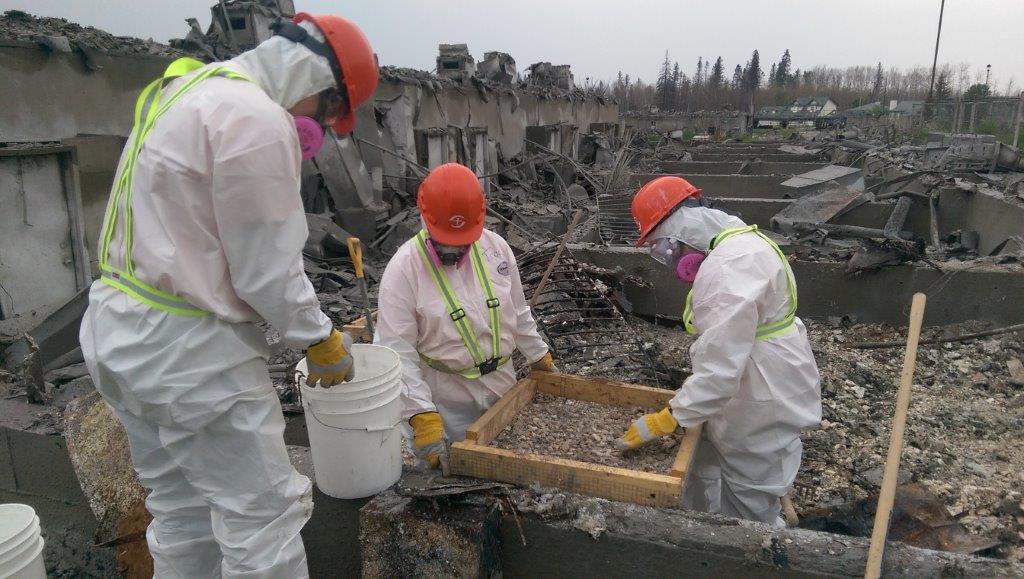
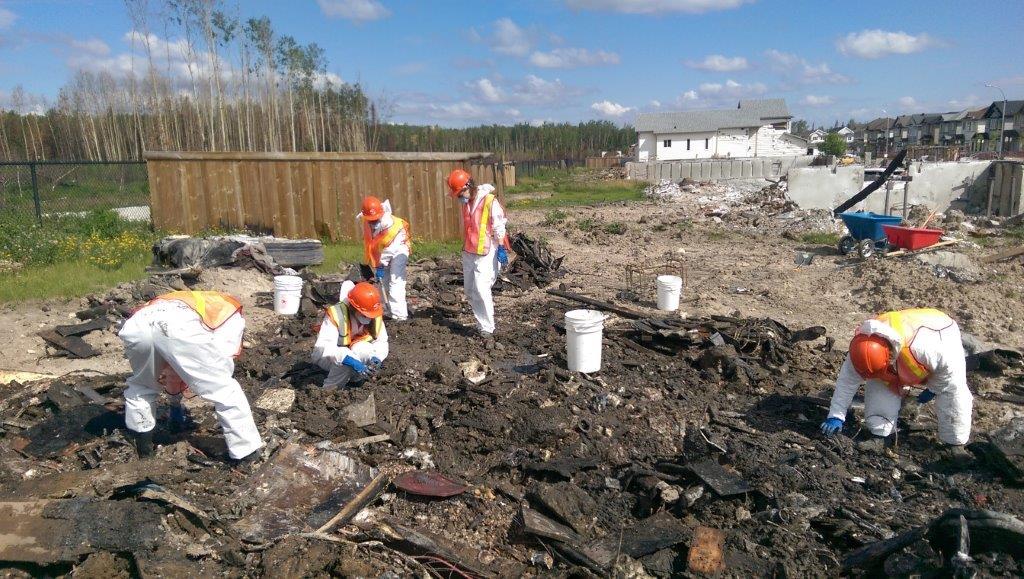
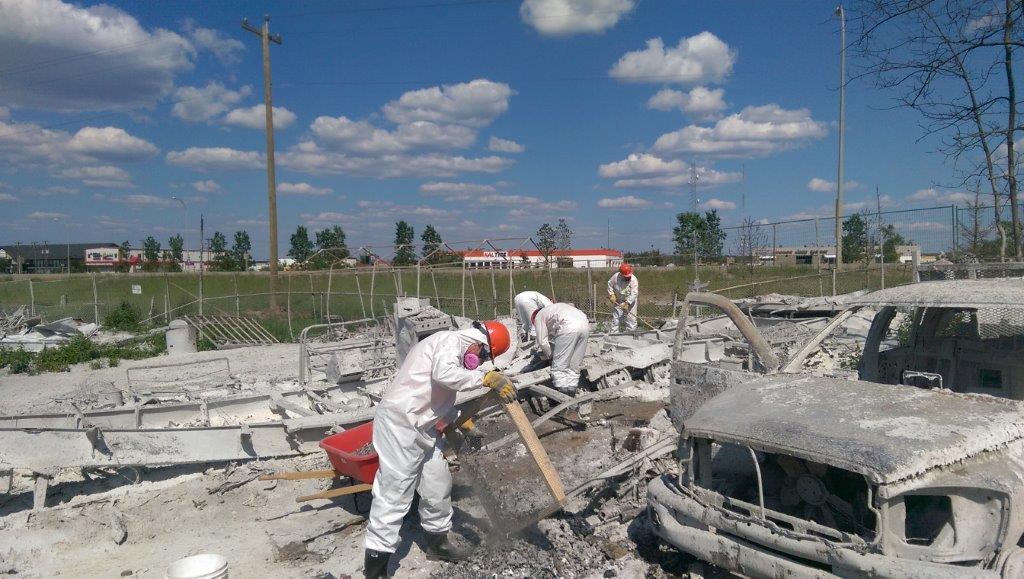
How did this all play out in Fort McMurray?   The Fort McMurray wildfires posed particular challenges for the Alberta NGO Council – evacuees were dispersed across several municipalities within the province, making coordination of evacuee supports difficult.  But we also had success because of our established relationships with emergency management sectors and pre-positioning in the POC.  Due to the demonstrated expertise of the Alberta NGO Council, two members of the council were invited to participate as part of a newly formed Provincial Emergency Social Services EOC.  This partnership allowed for the strategic deployment of NGO resources as needed and provided the NGO community with the real-time information necessary to make good decisions.

The Alberta NGO Council is still very much involved in the long-term recovery in Fort McMurray.  Three agencies specializing in reconstruction are partnering with the municipal recovery committee to provide direct aid to uninsured and under-insured residents who wish to restore their primary residences lost to the fire.  This spirit of cooperation instead of competition within the NGO community is a hallmark of the Alberta NGO Council and is all too rare in other disaster response settings globally.

In your province, the NGO Alliance of Ontario has recently been formed and is in its early stages.  Its membership, representing a number of will established, well equipped, and experienced NGOs, will provide a ‘clearinghouse’ of NGO supports and expertise for municipalities needing assistance during the response, recovery, and rebuilding phases of their communities.

Give us back our jobs

by Alain Normand

OAEM3AN-e1468590924898
Alain Normand

Would you hire a tailor to perform surgery? A tailor knows how to cut and sew cloth; wouldn’t they be able to do the same with patients?

Would you hire a construction worker to sell homes? A construction worker knows about buildings; wouldn’t they be good at selling them?

A big part of the problem with emergency management is that most key positions are filled by the wrong people. There a myth circulating, particularly at OFMEM, that anyone having played a role as incident commander is able to lead the emergency management office. I would offer that even those who suggest that they have police, fire, or military experience with ICS (Incident Command System) are severely lacking in the skills and knowledge required for emergency management. In fact, what first responders refer to as ICS is used only to a very limited extent. A number of studies published in the American Journal of Emergency Management and the Journal for Homeland Security have demonstrated that the majority of incident commanders are limited to providing leadership only to their own agency and have no experience in leading multi-agency or multi-jurisdictional incidents[1],[2]. “Each agency has its own command post and its own incident commander rarely working together. Also, rarely have a clear indication of who is ultimately in charge because each incident commander is in charge of their own silos.”

Meanwhile, emergency management professionals are all about multi-agency coordination.

The same studies show that most first responders have an operational view of emergencies, with some tactical elements. Meanwhile emergency management is a strategic dimension, aligned with many tactical elements and some operational aspects. Emergency management is about community well-being and about resilience. Response is the smallest part of the discipline. Most of the work is about preparedness and public education, with elements of prevention, mitigation, recovery, and business continuity.

If you want to see what happens when you give the job of emergency management to the wrong person, look no further than Fort McMurray. The evacuation planning for this situation was almost as poor as the response to the Katrina Hurricane. (By the way, Katrina happened right after the US moved away from FEMA (Federal Emergency Management Agency) towards a Homeland Security model thereby leaving EM to anti-terrorism experts). In Fort McMurray, with only one road in and no possibility of sheltering up north, a lot of alarms would have gone off if an EM (Emergency Management) professional had been in charge. The evacuation would have been done early on and progressively, not in a last minute mad rush. There would have been resupply stations along the way to ensure access to fuel, water, food and washrooms. The convoy through burning suburbs back to southern Alberta would have been avoided.

Let me clarify that I have huge respect for first responder and military personnel. Their jobs are extremely important and these are professional people with great skills and commitment. However, the skills they have do not automatically make them successful emergency management professionals.

Key EM positions at EMO (Emergency Management Ontario) and elsewhere should be filled by emergency management professionals. Once in place, changes to the legislation are more likely to mirror internationally accepted emergency management principles. Most of these EM professionals are educated to make use of lessons learned from other emergencies. Errors of the past can be avoided. Fort McMurray could have learned from Slave Lake and even from the Australia wildfires.

It’s time emergency management is recognized as a separate discipline with the same importance as police, fire and EMS. It’s not just a part-time job to be done by retired first responders.

I suggest we need to let our politicians know about this. Talk to your local MPP (Member of Provincial Parliament) about the issues involved with hiring the wrong people for such an important function. Anything less is putting citizens at risk and most politicians are not aware of this. Submit this to your municipal council and ask them to put pressure on the Ministry of Public Safety and Correctional Services. Letters from 447 Ontario communities may cause a bit of a stir with the Ministry.

Make sure your next operation is done by a surgeon, buy your home from a real estate broker, and let emergency management professionals handle disasters. Tell the minister to give us back our jobs.


Note: The opinions expressed here are totally my own and in no way reflect the position of my employer.

[1] Joseph E. Trainor, Benigno E. Aguirre, Dick A. Buck, University of Delaware/Disaster Research Center, “A Critical Evaluation of the Incident Command System and NIMS”, Journal of Homeland Security and Emergency Management, Volume 3, Issue 3, 2006

[2] Amy Donahue and Robert Tuohy , “Lessons We Don’t Learn: A Study of the Lessons of Disasters, Why We Repeat Them, and How We Can Learn Them”, The Journal of the NPS Center for Homeland Defense and Security, July 2006.


North City General Giving Emergency Managers a Leading Insurance Solution

by Margaret Mieczkowski

margaret-image
Margaret Mieczkowski

Emergency professionals such as Emergency Managers and First Responders are so often the unsung heroes, ensuring the safety of others as part of their day to day lives. North City General Insurance Brokers has been providing insurance products for First Responders and Emergency Managers for over 35 years, giving the people who protect us the coverage they deserve.

We have been providing market leading auto and home insurance for Emergency Managers and through the years we have built a reputation for offering customized coverage and a high level of customer care, allowing us to be recognized by many professional First Responder associations in Ontario.

We also have special rates for those students who are studying to become part of the Emergency Management community.

North City understands that unique qualities of professional groups should mean savings on coverage, giving emergency professionals the best possible price through a group insurance model. Our policies are tailored to Emergency Manager, Firefighters, Paramedics, Police and other groups.

Group insurance allows members of an emergency profession to save on their insurance premiums by having their insurance customized towards their specific role, grouped with colleagues.

Ontario introduced reforms to auto insurance accident benefits on June 1, 2016, with the Financial Services Commission of Ontario (FSCO) mooting the changes as making it easier for customers to more through the claims process.

The Statutory Accident Benefits model has undergone a significant overhaul, changing the claims process for those injured in an auto accident. The new law makes what was often a conf